Corrosion rarely announces itself
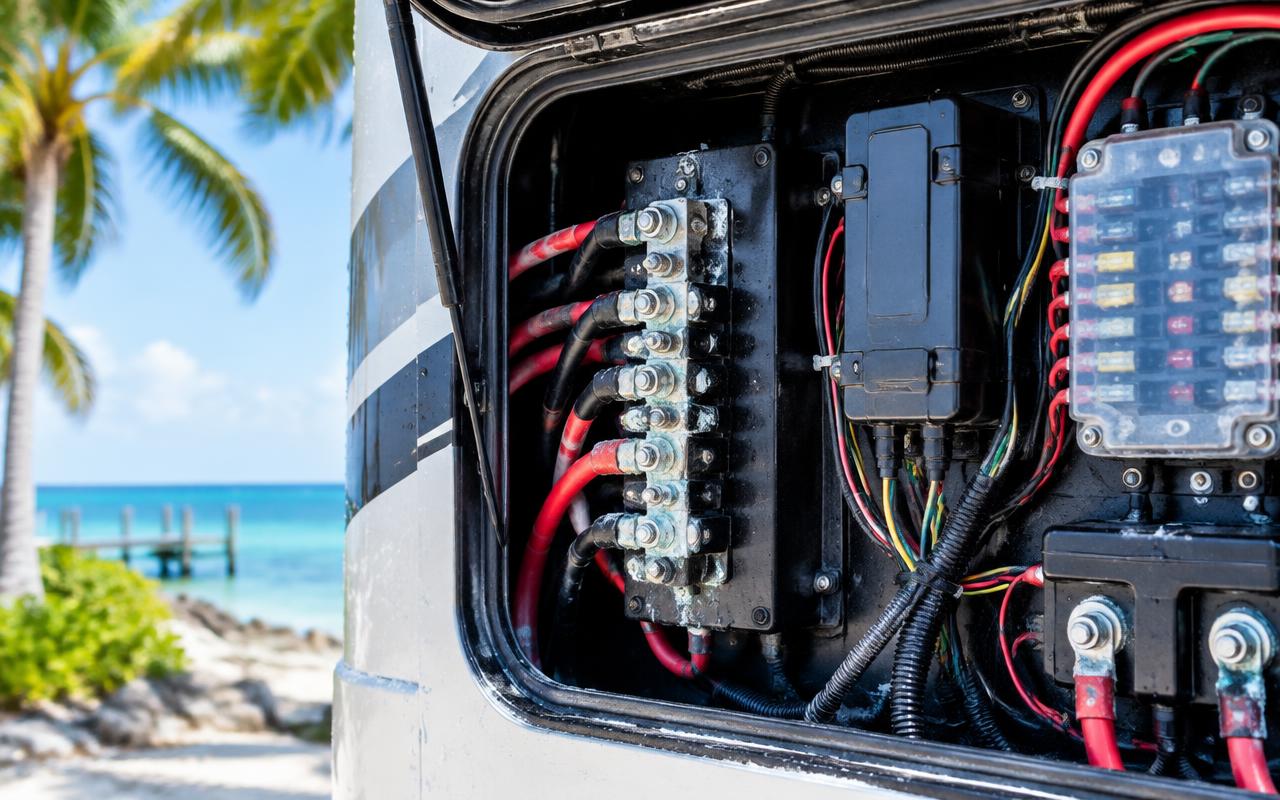
An RV can look perfectly dry while moisture and salt are working on exposed metal. The Keys combine humid air, frequent breezes, and salt carried inland from the water. Small amounts settle on terminals, ground points, circuit boards, plugs, and exterior connections. Add moisture and electricity, and the metal begins to change.
Early corrosion may look like dull metal, white powder, or green crust around copper. It can also hide beneath a terminal or inside a connector. The first symptom is often not a complete failure. It is a light that flickers, an appliance that restarts, or a fault that disappears before anyone can test it.
Why problems seem to move
Corrosion adds resistance. A connection may pass enough current for a meter but fail when a motor or compressor starts. Heat can make the resistance worse, then cooling can make the circuit appear normal again. That is why a problem may show up in the afternoon, during an AC start, or only after rain.
Shared grounds make the picture more confusing. Several devices can act strangely when one ground point deteriorates. Replacing the device that complains will not repair the connection feeding it. Diagnosis needs voltage testing under load and a careful inspection of the full path.
Simple prevention habits
Keep exterior electrical covers closed and seals in good condition. Do not aim a pressure washer into appliance vents, shore-power inlets, or battery compartments. Look at battery terminals and accessible grounds for discoloration. Keep the shore cord plug clean, dry, and fully seated. A loose plug creates heat even without visible corrosion.
After heavy rain or a long period near the water, notice new odors, warm plugs, unusual fan sounds, or intermittent operation. Never open energized panels unless you are trained to do so. Owners can safely observe, document, and stop using a suspect circuit. Testing live RV power belongs with someone who understands both 12V DC and 120V AC systems.
When to call
Repeated breaker or GFCI trips, heat at a connection, visible burned material, or a sharp electrical smell should be treated seriously. Disconnect the affected source if it is safe and call for help. The same applies when batteries stop charging normally or several unrelated devices fail together.
The useful clue is often the pattern. Note whether the fault happens on shore power, battery power, generator power, or only when a large load starts. Photos of visible corrosion and the exact error message can shorten the path to a diagnosis. The goal is to find the connection creating the symptom, not to keep replacing the symptom.
Need help with your RV in the Keys?
GBoyz Mobile RV Repair comes to your campsite from Mile Marker 75 to Key West.
Call (877) 722-0218